
Water Damage Restoration: Capture More Emergency Losses
Water damage restoration margins depend on speed. Automate after-hours intake to screen callers, book qualified losses, and stop missed emergency calls.
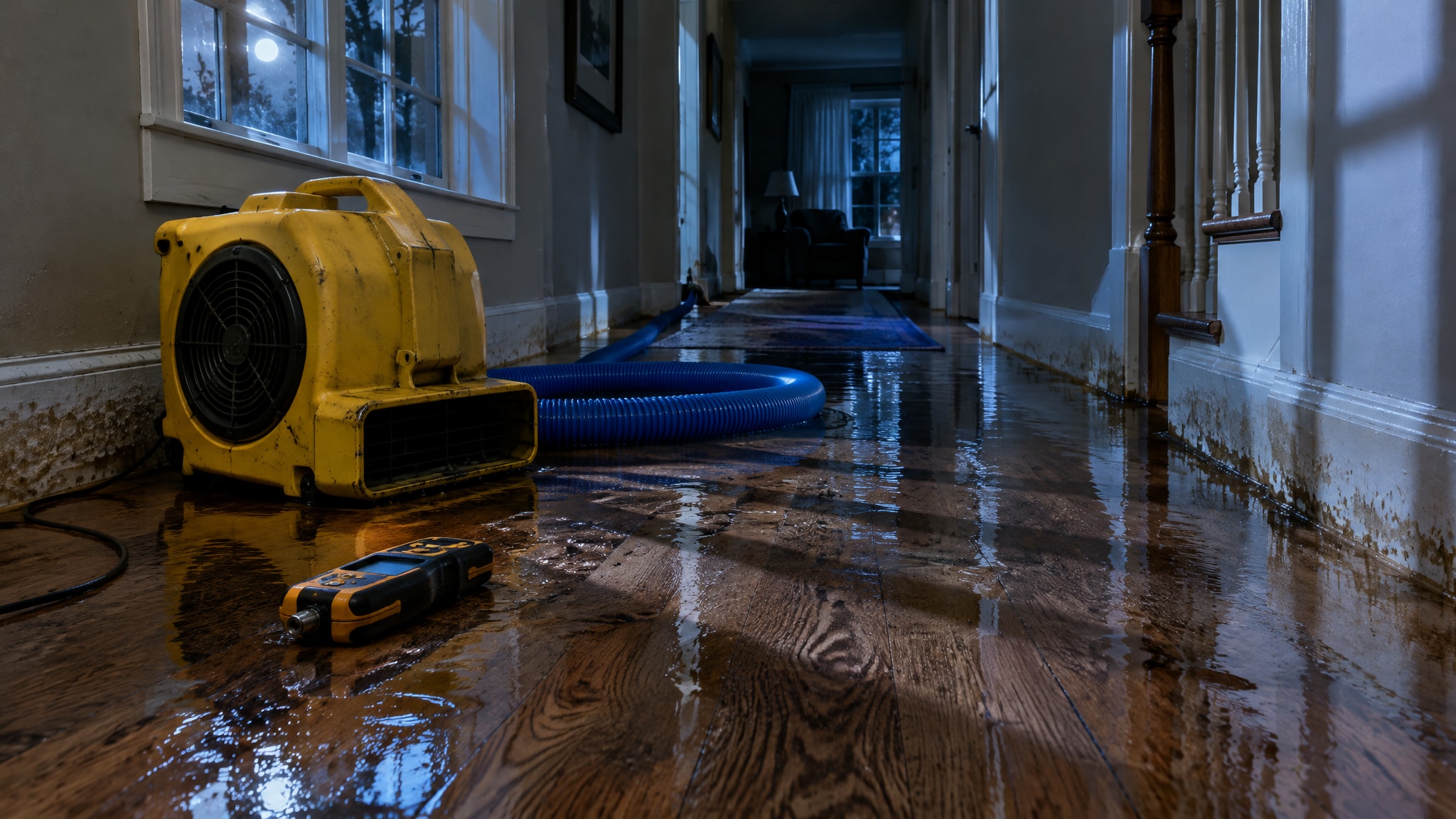
Water damage restoration is a race against biological decay. The clock starts the moment water hits drywall. Your margin on any given loss depends less on your drying equipment and more on whether you answer the phone before the homeowner calls your competitor. The first 48 hours decide whether a job stays a clean extraction or turns into a mold remediation project that eats your overhead.
That window isn't negotiable, for health reasons and for job scope. Yet most restoration companies still run voicemail during the exact hours when pipes burst and storms hit. You can't mitigate what you don't capture, and capturing the loss takes operational systems that move with the same urgency as your field crews. The difference between a booked job and a missed one often comes down to seconds, not hours.
The Economics of Water Damage Restoration Response Time
A 2:00 AM burst pipe call that goes to voicemail typically ends with the homeowner calling the next restoration company on the list. That's not a brand loyalty problem. It's an access problem, at the exact moment panic overrides preference. The homeowner standing in two inches of water at night doesn't want to leave a message and wait for a callback. They want to hear that help is coming now.
When your after-hours line rolls to voicemail, you're telling that caller to look elsewhere. The cost of missed emergency calls compounds fast, because each unanswered ring hands over not just one invoice but the whole relationship, future losses, referrals, program work, to whichever competitor picked up first.
Mold colonies can start forming in as little as 24-48 hours after water damage occurs, according to the restoration process standards outlined by The Expert Cleaner. That biological clock sets your operational tempo. Every hour of delay raises demolition costs and lowers the odds of saving structural materials. A crew on-site at hour four can often save baseboards, drywall and subflooring through extraction and targeted drying. A crew that shows up at hour forty-eight is looking at tear-out, antimicrobial treatment and a liability conversation about secondary contamination.
Your dispatch board already reflects this, even if your intake process doesn't. Jobs secured in the first few hours carry higher margins, because the scope stays contained and labor goes toward mitigation instead of reconstruction. Jobs that enter your system late arrive with expanded scopes, frustrated homeowners and adjusters asking why the damage spread so far before anyone professional showed up.
Speed equals revenue in this industry.
The logistical challenge starts long before boots hit the ground. Securing the appointment is the first link in a chain that runs through assessment, extraction, drying, monitoring and clearance testing. If that first link breaks because no one took the call, the whole chain fails, no matter how skilled your technicians are or how good your equipment is.
You already know what a qualified loss looks like for your business. Knowing the criteria and enforcing them at 2:00 AM are two different things. Most owners can size up a good job in thirty seconds during business hours, but that same screening discipline falls apart once the office closes and an answering service takes over. Generic services take messages. They can't tell a catastrophic supply-line break from a dripping faucet, so they either wake your on-call manager for every inquiry or let real emergencies sit in a queue until morning.
That gap between your standards and your after-hours intake is where revenue leaks out. The homeowner with the burst pipe doesn't care about your screening protocols. They care whether someone competent is listening right now. Fail to deliver that, and you hand the advantage to whoever has already solved this problem.
Defining Qualified Losses in Emergency Intake
Not every wet floor warrants an emergency truck roll. Telling actionable jobs from noise protects your estimator's time and your crew's availability. The average American family uses more than 300 gallons of water per day at home, so minor leaks, appliance drips and condensation issues generate constant background volume that sounds urgent to the caller but doesn't justify mobilization. Sending a crew out on these calls burns fuel, wages and the chance to be free for a real catastrophe.
Operational discipline means screening criteria that filter inquiries before they hit your dispatch board. Loss type matters, because clean water from a supply line calls for a different response than category-three sewage backup or storm intrusion. Property type drives equipment needs and crew sizing. Insurance status affects documentation and authorization. Service-area boundaries stop wasted drive time on calls you can't profitably serve.
These criteria have to hold at every hour, not just when your office manager is at her desk. An automated intake system applies the same rules at midnight as it does at noon, so your standards don't drift based on staffing or fatigue. That consistency matters most during storm surges, when call volume spikes and human judgment is the first thing to slip.
Screening isn't gatekeeping.
It's resource allocation, making sure your limited emergency capacity goes to losses that fit your business. Send an estimator to a property that was never going to close, whether it's outside your territory, uninsured, or below your minimum threshold, and you've lost the chance to answer a caller who would have become a profitable client. That loss never shows up on your P&L. It shows up in crew utilization and after-hours burnout.
Your intake process should also capture the details that speed up the move from call to confirmed appointment. Standing water depth, active hazards and affected square footage shape crew composition and equipment staging before anyone arrives. Insurance carrier information and policy numbers cut administrative drag during that first visit. These data points turn a panicked phone call into a structured work order your team can execute the moment they walk in.
The alternative is sending crews in blind, forcing improvisation, extra trips, or a call back to the office for clarification. Each of those friction points adds time to the response window and eats into the margin advantage that early intervention buys. Qualified intake isn't just about filtering bad leads. It's about arming your field teams with what they need to start mitigating the moment they park the truck.
Automating the Path from Panic to Dispatch
Capturing emergency losses means answering within seconds and booking straight into open dispatch slots, not taking passive messages. Water damage restoration runs on systems that enforce qualification rules at every hour, because the biological deadline doesn't pause for weekends, holidays or staff shortages. Automation closes the gap between the criteria you already know and your actual after-hours performance, applying those standards without drift or delay.
This isn't about replacing judgment. It's about extending your standards into the hours when human availability isn't economically realistic. An AI-driven intake agent screens callers against your fit rules, confirms service area and loss type, and books appointments directly into real-time calendar slots. Qualified emergencies get immediate confirmation and routing to on-call. Unqualified inquiries get a polite redirect, without waking your on-call technician for every call.
The system catches the 2:00 AM water loss that voicemail would have sent to the next company on the list. It stops double-booking during high-volume events by holding slots only for confirmed, qualified losses. It covers the full path from first panicked call to confirmed on-site arrival: confirmation texts, rescheduling options, and day-before reminders that cut no-shows and protect estimator time.
You can automate after-hours calls without hiring overnight staff or paying for an answering service that doesn't know restoration-specific screening. The platform connects to your existing Google Calendar, Microsoft 365, or managed dispatch board, reads live availability, and writes bookings directly into it. Confirmation texts and spoken disclosures keep things professional, and searchable transcripts with revenue attribution reporting show you exactly what the system captures and converts.
Capturing emergency losses is an operational discipline, not a technology purchase. The tool exists to enforce standards you already have but can't currently run at scale during off-hours. Match your intake process to the pace of that biological timeline, and you stop losing profitable jobs to whoever simply answered the phone faster.
Automation doesn't create demand or manufacture qualified leads out of nothing. It makes sure the demand already hitting your phone line turns into booked work instead of dissolving into voicemail, or going to whoever picked up first. The 24-48 hour mold growth window sets the pace. Your intake system either meets it or forfeits the margin that early response makes possible.
Frequently Asked Questions
How much does it usually cost to fix water damage?
Costs vary widely based on loss category, affected square footage, and whether structural materials can be saved versus replaced. Early intervention typically reduces total cost by limiting demolition and preventing mold remediation, while delayed response expands scope and drives expenses higher. Your average job value depends on local labor rates, material costs, and whether the loss is covered by insurance or self-pay.
Can water damage be restored?
Most water damage is restorable if addressed within the first 24-48 hours before mold colonization begins and structural materials degrade beyond salvage. Category one clean water losses have the highest restoration success rate, while category three sewage or flood water often requires removal of porous materials regardless of response time. The determining factor is how quickly extraction and drying begin after the initial event.
What does water damage restoration include?
Professional restoration includes emergency water extraction, structural drying with industrial air movers and dehumidifiers, moisture monitoring, antimicrobial treatment, and content manipulation. The scope may also involve demolition of unsalvageable materials, odor control, and post-drying verification testing. Documentation for insurance claims runs parallel to physical mitigation throughout the process.
Is water damage restoration covered by homeowners insurance?
Most standard policies cover sudden and accidental water damage from internal sources like burst pipes or appliance failures. Flood damage, gradual leaks, and maintenance-related issues are typically excluded and require separate flood insurance or out-of-pocket payment. Coverage determination happens during the claims adjustment process, not at the moment of emergency response.