
Fire and Water Restoration: Capturing Emergency Losses
Fire and water restoration revenue depends on speed. Learn to capture emergency losses, qualify leads, and automate dispatch for after-hours calls.
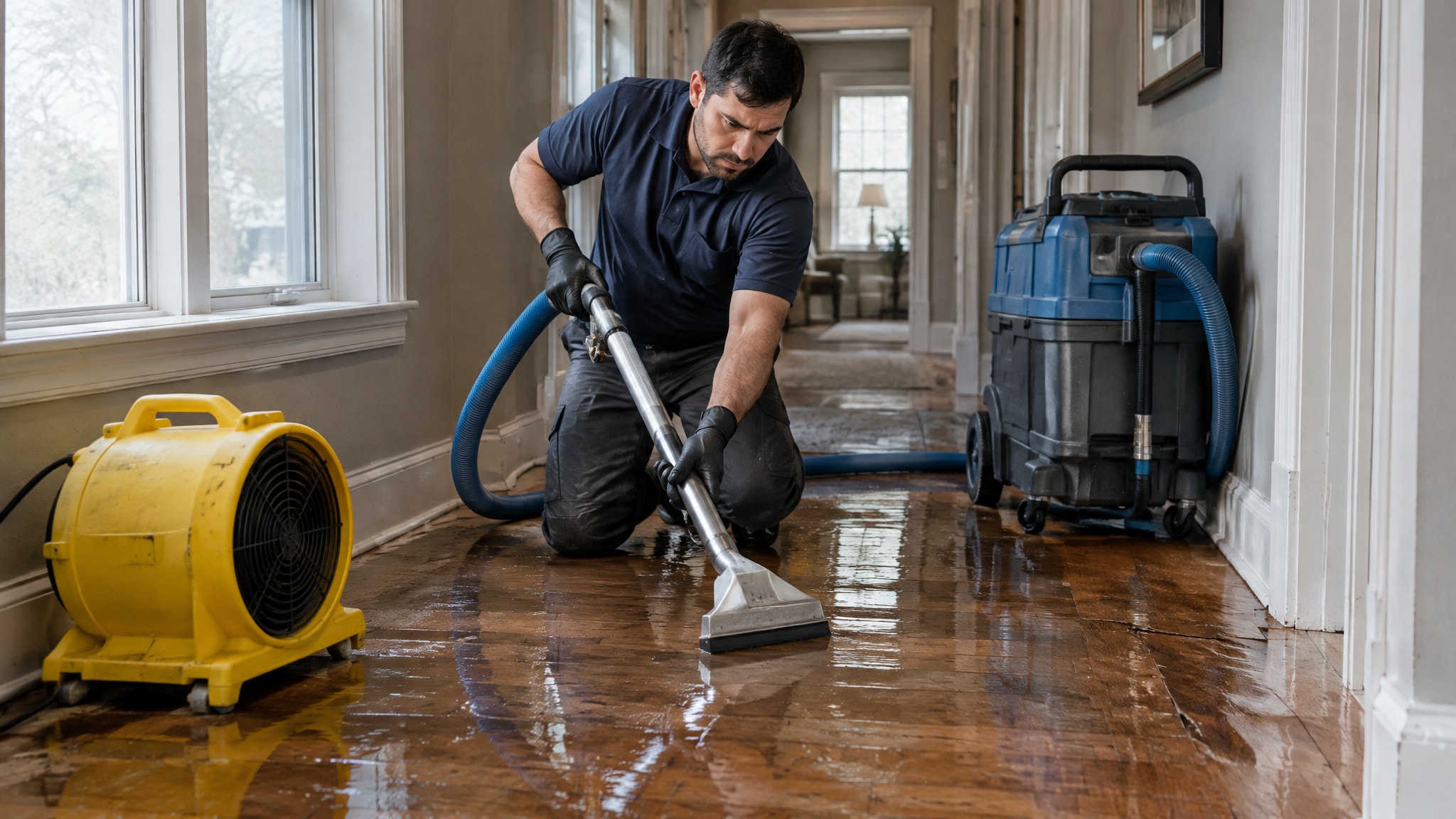
Fire and water restoration is an emergency response discipline, not a construction trade. The work starts when a property owner calls in distress after a burst pipe, kitchen fire or storm surge, and it ends only when the immediate threat to the structure is contained. For restoration companies, revenue depends on answering that first call faster than the competition and getting a crew out before secondary damage sets in. This guide breaks down the operational realities of capturing and managing those emergency losses.
Defining Fire and Water Restoration Services
Voicemail sends callers to the next company on the list instead of booking an immediate inspection. That's how restoration businesses lose qualified water losses. You cannot treat these inquiries like standard service requests, because the caller's decision window closes in minutes, not days, and every minute of delay increases demolition scope and cuts the odds of salvage.
Scope of Emergency Mitigation
Emergency mitigation focuses on stopping active damage and stabilizing the environment for safe occupancy. Crews extract standing water, set up industrial drying equipment, board up compromised structures, and apply antimicrobial treatments to head off mold colonization in the critical first 48 hours. These tasks need specialized equipment and IICRC-certified technicians who can make rapid triage decisions under pressure. That's what separates them from general contractors, who schedule work weeks in advance.
Restoration Versus Standard Repair
Standard home repairs follow a predictable timeline: homeowners get multiple bids and schedule work at their convenience. Fire and water restoration runs on the opposite premise. Vendor selection happens during the initial emergency call, and price gets negotiated later, through insurance adjusters or documented self-pay agreements. Your ability to answer, qualify and book that call decides whether you secure the entire loss or just get a referral for the eventual rebuild phase.
The Economics of After-Hours Emergency Calls
Most catastrophic water losses happen outside normal business hours, when pipes burst overnight or storms hit on weekends. Staffing a live dispatcher around the clock is cost-prohibitive for most independent operators. The alternative, voicemail or generic call forwarding, hands high-value jobs to competitors with better coverage.
Cost of Missed Water Loss Leads
A single missed emergency call is worth more than one lost job. It costs you the chance to build trust during the homeowner's moment of highest vulnerability. Missed call cost data shows after-hours callers rarely leave detailed voicemails and almost never call back once they've reached another company. When your phone goes unanswered at 2 a.m. you're not just missing a lead. You're training the market to see your competitor as the reliable option.
Speed to Answer as a Revenue Driver
Speed to answer is the primary filter in the restoration sales funnel, because panicked property owners read response time as competence. Companies that answer within seconds and book immediate inspections win a disproportionate share of the market during storm surges and holiday periods, when call volumes spike. Holding that pace without burning out on-call staff takes infrastructure that treats every incoming call as a revenue event, not an administrative task. That's the premise behind consistent after-hours emergency coverage.
Qualifying Restoration Leads at First Contact
Not every distressed caller is a viable job for your service area, equipment inventory or insurance program relationships. Sending an estimator to an unqualified lead wastes fuel, technician time and the chance to respond to a genuine emergency elsewhere.
Screening for Loss Type and Severity
Qualified restoration intake means verifying loss type, property type, service area, standing water presence, and payment source before crews get dispatched. Automated screening enforces these fit rules the same way every time, so a 3 a.m. call about a flooded basement gets the same scrutiny as a Tuesday afternoon commercial loss. That discipline keeps crews from rolling to properties outside your geographic zone, hazards you can't safely mitigate, or insurers whose programs you don't accept.
Distinguishing Insurance from Self-Pay Work
Insurance claims and self-pay jobs follow different documentation, pricing and approval workflows, and you need to identify which one you're dealing with during the initial intake conversation. Skip that step and you get billing disputes, delayed payments and adjusters stuck with incomplete file packages. Your intake process should confirm coverage status, deductible amounts and preferred vendor relationships before you commit resources, so each loss routes through the right administrative channel from the start.
Dispatch Coordination and Scheduling Logistics
Matching open crew slots with panicked callers in real time creates friction that manual dispatch boards can't resolve during peak demand. Overcommitting resources during a storm surge damages your reputation just as badly as not answering the phone.
Managing Crew Availability in Real Time
Live calendar integration turns dispatch from a reactive guessing game into a controlled allocation of finite resources. When your scheduling system reflects actual crew locations, equipment availability and job completion estimates, you can offer accurate arrival windows that cut callback volume and prevent technician burnout. That visibility lets you book emergency inspections knowing each commitment matches verified capacity, not hopeful assumptions.
Preventing Double-Booking During Storm Surges
Storm events compress weeks of typical call volume into hours, overwhelming even experienced dispatch teams running on memory or static spreadsheets. Automated slot holds and confirmation texts stop the double-booking errors that force you to cancel on distressed homeowners mid-crisis. Scheduling infrastructure built to hold up under that load protects your team's credibility exactly when trust matters most and competitors are publicly dropping the ball.
Smoke Remediation and Specialized Recovery Protocols
Smoke remediation needs distinct intake questioning, because odor penetration follows invisible pathways that differ from visible fire or water damage. Technicians have to assess HVAC contamination, porous material absorption and protein versus wet smoke residues before they can determine equipment needs and safety protocols. Building this triage into your standard emergency workflow keeps smoke-only losses from getting misrouted as general fire cleanup jobs.
This protocol doesn't replace structural fire restoration. It runs alongside it, as a parallel workflow with its own certification and equipment inventory.
Evaluating Reputable Restoration Providers
Marketing claims about response times and certifications mean little without verifiable proof and documented operational capacity. Property owners and insurance partners need objective criteria to tell established restoration firms apart from opportunistic contractors who show up after disasters.
Verifying Licensing and Certifications
Industry directories list certified restoration experts across regions, which makes credential verification a baseline expectation for reputable providers. The Better Business Bureau's restoration category and IICRC firm locators give you third-party validation that a company carries current licenses, insurance and technician certifications. Lean on those independent sources, and you avoid partnering with operators who display expired credentials or lack the training required for complex losses.
Assessing Emergency Response Infrastructure
Genuine emergency capability requires documented systems, not marketing promises of 24/7 availability. Check whether a provider uses integrated dispatch software, maintains redundant communication channels, and employs dedicated after-hours staff or automated intake systems that actually book jobs instead of just taking messages. Companies that invest in this infrastructure are committed to the restoration business model itself, not chasing seasonal disasters.
Automating Intake for Restoration Growth
Scaling emergency coverage used to mean hiring more dispatch staff, night-shift coordinators and weekend coverage at linear labor cost. Automation decouples response capacity from headcount, so you can handle surge volume without the expense rising right alongside it.
AI Voice Agents Versus Generic Answering Services
Generic answering services fail restoration firms because they capture messages but can't screen callers against fit rules or book dispatch slots. An AI voice agent versus answering service comparison shows that message-taking alone skips the qualification and booking steps that turn an emergency call into a scheduled job. Restoration-specific automation answers in seconds, applies your fit criteria, checks live calendar availability and confirms appointments, all while your human team sleeps or handles active mitigation work.
Capturing Revenue Without Adding Headcount
You can expand after-hours coverage and tighten qualification consistency without hiring more staff or paying overtime. Restoration-specific intake solutions turn fixed labor cost into a software expense that scales with your call volume instead of running ahead of it. That means you catch the 2 a.m. water loss that used to go to voicemail, while your existing team stays focused on field operations and complex case management during business hours.
Automation handles the repetitive qualification and booking work that eats up dispatcher attention. It doesn't replace human judgment on complex losses involving active hazards, disputed coverage or multi-peril events that need a senior estimator's review.
Frequently Asked Questions
What does water restoration do?
Water restoration extracts standing water, dries affected structures with industrial equipment, and applies antimicrobial treatments to prevent mold growth within the first 48 hours. The work focuses on stopping active damage and stabilizing the property for safe reoccupancy rather than completing cosmetic repairs. Technicians use moisture meters and thermal imaging to verify drying progress before releasing the job.
How is smoke remediation done?
Smoke remediation begins with identifying the smoke type, protein, wet, dry or fuel-oil, because each requires different cleaning agents and equipment. Technicians seal unaffected areas, clean HVAC systems to prevent cross-contamination, and treat porous materials with specialized deodorization methods like ozone or hydroxyl generators. The process often runs parallel to structural fire restoration but follows separate safety and documentation protocols.
How to get water restoration jobs?
Most water restoration jobs come from answering emergency calls faster than competitors and qualifying callers against your service criteria before dispatch. Building relationships with insurance adjusters, plumbers and property managers generates referrals, but after-hours call capture determines your share of urgent losses. Consistent speed-to-answer and professional intake screening convert more inquiries into booked inspections than marketing spend alone.
What are some reputable restoration companies in Los Angeles?
Reputable Los Angeles restoration companies maintain current IICRC firm certification, valid California contractor licensing and documented emergency response infrastructure. Verify credentials through the Better Business Bureau's restoration category and IICRC firm locator rather than relying solely on online reviews or advertising claims. Established firms also participate in major insurance carrier programs and maintain dedicated after-hours dispatch capabilities beyond standard business hours.