
Restoration Lead Triage That Protects Every Truck Roll
Restoration lead triage turns urgent calls into qualified, scheduled jobs while protecting crews from bad fits, calendar conflicts, and wasted truck rolls.
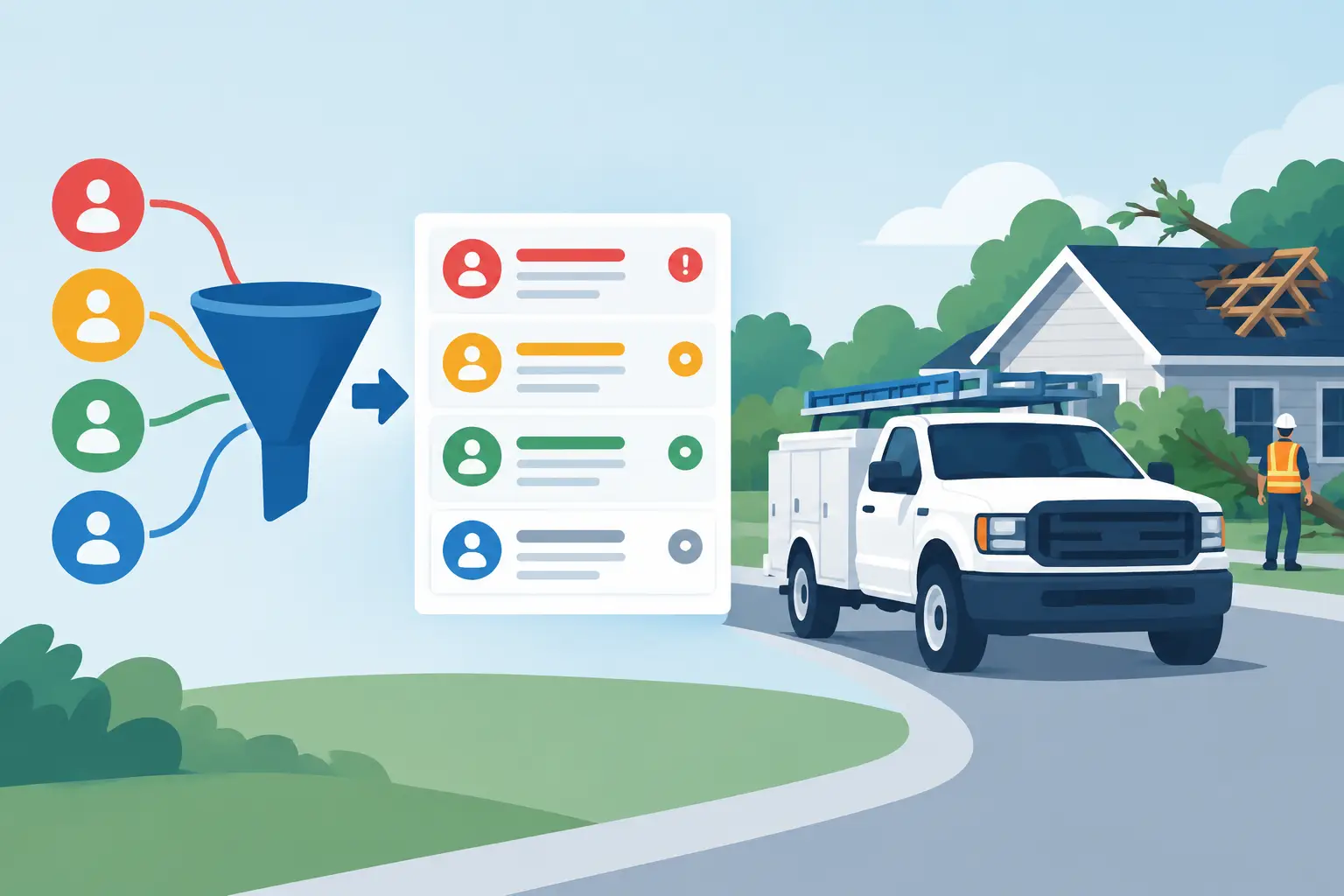
A homeowner calls at 9:14 p.m. after a supply line bursts behind a washing machine. They are stressed, unsure how much water has spread, and calling the first restoration company that answers. Restoration lead triage determines whether that call becomes a profitable emergency job, a correctly routed referral, or a vague voicemail discovered after another company has already dispatched.
For a restoration business, every inbound inquiry is not equal. Some callers need immediate mitigation. Some need an estimate for mold remediation next week. Some are outside the service area, have the wrong type of loss, lack authorization to approve work, or are seeking a service your team does not provide. Treating every caller the same creates the same result: overloaded office staff, poor dispatch decisions, and crews driving to jobs that should never have reached the calendar.
What restoration lead triage actually does
Restoration lead triage is the operating process for receiving an inquiry, identifying the loss, confirming fit, assessing urgency, and moving the right opportunity into the right next step. That next step may be an emergency dispatch, a scheduled inspection, an insurance-related intake, an escalation to an on-call manager, or a polite decline.
The goal is not to make the caller jump through hoops. It is to collect the minimum information required to make a reliable operational decision while the prospect is still engaged. In water, fire, mold, and biohazard work, response speed matters. But speed without qualification can fill the board with bad appointments and leave the best opportunities waiting.
A disciplined triage process answers a few practical questions early:
- What type of damage or service does the caller need?
- Is there an active emergency, and is the property safe to enter?
- Where is the property, and does it fall inside the service area?
- Is the caller the owner, tenant, property manager, or another authorized contact?
- Is the loss insured, and does the caller need immediate mitigation or a future inspection?
- Is there a genuinely open appointment or dispatch window available?
Those answers create a usable record for dispatch. They also prevent the common failure mode of scheduling a generic “water damage” appointment with no address confirmation, no loss details, and no indication of whether the customer expects a crew tonight or an estimate next Tuesday.
The cost of treating every lead as urgent
The loudest caller is not always the best lead. A caller with a slow leak, no authority to approve work, and a property 75 miles outside your normal coverage may sound urgent. That does not make a late-night truck roll the right response.
The opposite mistake is just as costly. A real emergency caller who reaches voicemail may call two more companies before your office opens. By morning, your team has a message but no job. The loss was urgent at 9 p.m., not at 8 a.m.
Good triage separates urgency from noise. It gives true emergencies a fast path while applying clear fit rules before the dispatch board is affected. That is how a restoration company protects both response time and crew capacity.
There is a trade-off. If qualification is too aggressive, a business can reject legitimate work because a distressed caller cannot provide perfect information. If it is too loose, staff spend their day correcting weak intake records and chasing appointments that should have been screened out. The right standard is not perfection. It is enough verified information to choose the next action with confidence.
Build the workflow around dispatch decisions
A triage workflow should reflect how your operation actually runs, not how a generic call script imagines it runs. Start with the decisions your office or on-call manager makes every day.
Step 1: Capture the event, not just contact details
Name, phone number, and address are necessary, but they do not tell dispatch what happened. Intake should establish the source and current condition of the loss. Is water still flowing? Is there standing water? Did a fire department respond? Is mold visible, suspected, or tied to a prior leak? Is the caller reporting sewage, contaminated water, or a biohazard condition?
The system should record the answers in a way a coordinator can scan quickly. “Water loss, second-floor supply line, water shut off, occupied home, visible ceiling damage downstairs” is actionable. “Customer needs restoration” is not.
Step 2: Apply business-specific qualification rules
Every restoration company has boundaries. You may cover certain ZIP codes, accept commercial losses only above a certain threshold, require property-owner authorization for non-emergency work, or route certain categories to a specialist. Those rules should be stated clearly and applied consistently.
This is where many teams lose control after hours. A well-meaning receptionist, answering service, or generic chatbot may promise a visit before confirming coverage, job type, or availability. The office inherits the problem later.
Instead, qualification should produce a clear status: qualified for emergency response, qualified for scheduled inspection, needs manager review, or not a fit. A lead that is not a fit should not consume a crew slot merely because it was first in line.
Step 3: Route by urgency and availability
Emergency work and scheduled work need different paths. A burst pipe with active water intrusion may require an on-call alert immediately. A caller seeking a mold inspection can be offered the next appropriate estimate window. A property manager with multiple units may need escalation to a commercial contact rather than a standard residential booking.
The calendar matters here. An offered appointment must be real. If a caller is told Tuesday at 10:00 a.m., that slot should be held while they confirm, then written to the live dispatch board or calendar once booked. Otherwise, two callers can receive the same promise and your staff starts the day with an avoidable conflict.
A five-minute hold is often enough to protect the slot during the final intake steps. If the caller does not confirm, the slot returns to inventory. That is a small operational detail with an outsized effect on schedule accuracy.
Step 4: Confirm the appointment and preserve the handoff
A booked appointment is not the end of triage. The caller needs a confirmation text with the service window and any preparation instructions. Your team needs the loss details, property address, decision-maker status, contact information, and the reason the appointment was routed as it was.
For emergency response, the handoff should identify who was notified and when. For a scheduled inspection, it should show the confirmed date, time, and assigned workflow. If a customer reschedules or cancels, the calendar and dispatch system must reflect that change rather than leaving a dead appointment on the board.
The morning report should be simple: booked jobs, pending reviews, declined leads, cancellations, and any emergency escalations that occurred overnight. No one should have to listen to a chain of voicemails to reconstruct what happened.
Where automation earns its place
Automation is useful when it follows your operating rules. It is not useful when it creates a polished conversation that your dispatch team cannot act on.
An after-hours voice and SMS agent can answer within seconds, ask the approved questions, score the opportunity, and schedule only into available windows. It can also send a missed-call text-back when the line is busy, giving the prospect a way to continue the intake rather than moving to the next contractor.
For example, PsPro AI can use your trade-specific intake playbook to screen a 9 p.m. water-loss caller, hold an available slot, write the confirmed booking to the designated calendar or dispatch endpoint, and alert the right person when your escalation criteria are met. The value is observable: the caller receives a response, the crew receives usable job information, and the calendar reflects a commitment that actually exists.
Automation should still leave room for judgment. A caller reporting possible electrical hazards, a large commercial loss, or a situation that does not fit the rules may need immediate human review. The system should escalate those cases, not force them through a standard booking flow.
Measure triage quality, not just call volume
A busy phone line does not prove a healthy intake operation. Measure whether leads are answered, qualified, booked, confirmed, and converted into revenue. Track missed calls, first-response time, qualified-lead rate, booking rate, cancellation rate, no-show rate, and revenue tied to booked appointments.
Also examine the leads you decline. If your team is routinely rejecting calls outside the service area, your targeting or directory listings may be creating avoidable noise. If qualified callers frequently fail to book, availability, pricing expectations, or follow-up may be the issue.
The most useful metric is not simply how many conversations occurred. It is how many qualified opportunities reached a real next step without creating unnecessary work for staff or crews.
A restoration business cannot control when a pipe breaks or when a homeowner starts calling. It can control whether that moment reaches a trained person, follows clear rules, and lands on a schedule your team can honor. That is the practical standard for triage: fewer unanswered voicemails, fewer wasted truck rolls, and more jobs that are ready for action when your crew arrives.